
What Is Vietnamese Table Tennis Using to Analyze Itself?
**Câu trả lời cốt lõi (Core answer):** Bóng bàn Việt Nam thiếu dữ liệu thi đấu có thể kiểm chứng: ban tổ chức chỉ công bố tỷ số, không công bố điểm rơi giao bóng, thời lượng pha bóng hay quãng đường di chuyển. Vì vậy tám trong chín chiều phân tích chiến thuật chuẩn đều không thể đánh giá, khiến mọi nhận định phụ thuộc vào quan sát chủ quan. **Dữ kiện chính (Key facts):** - SEA Games 32 (tháng 5/2023): Đinh Anh Hoàng và Trần Mai Ngọc giành huy chương vàng đôi nam nữ bóng bàn. - WTT xếp hạng theo cơ chế cuộn 52 tuần; điểm cũ hết hạn sau một năm, tạo áp lực bảo vệ điểm. - Số vận động viên Việt Nam dự WTT đủ thường xuyên để tạo chuỗi dữ liệu cá nhân rất ít. - Bóng bàn từng đổi luật: bóng lớn hơn, tính điểm 11, siết giao bóng, cấm keo tăng lực, chuyển bóng nhựa. - Bàn bóng bàn dài 2,74 mét; chi phí thu thập dữ liệu video thấp hơn nhiều môn khác. **Nguồn (Source attribution):** Phân tích gốc của Đặng Anh, dựa trên quan sát trực tiếp qua băng trận SEA Games 32, tháng 5/2023. **Hỏi đáp liên quan (Related Q&A):** - Hỏi: Vì sao không thể đánh giá kỹ thuật của vận động viên Việt Nam? Đáp: Vì thiếu dữ liệu xoáy, tốc độ và tỷ lệ thắng điểm theo từng cú đánh được công bố. - Hỏi: Chiều phân tích nào bóng bàn Việt Nam đọc được? Đáp: Cục diện cạnh tranh quốc tế, do dữ liệu đến từ ITTF và WTT. - Hỏi: Rào cản chính có phải là nguồn lực? Đáp: Không; một máy quay và phần mềm miễn phí đủ tạo dữ liệu đầu tiên, nên rào cản nằm ở động cơ công bố.
At three in the morning, I replayed the mixed doubles final of the table tennis event at SEA Games 32 — Dinh Anh Hoang and Tran Mai Ngoc against the Singapore pair. The frame froze at the twelfth minute of the third game. I drew a line across the middle of the table, marked where the serve landed, then measured the distance between the two Vietnamese players the instant the ball left the racket. That night I took forty-two measurements. On the forty-third I stopped, because I realised I had nothing to compare them against.
A single measurement is just a single measurement. To become data, it needs a sequence behind it: the same table, the same pairing, the same spin type, repeated often enough to separate signal from chance. That sequence does not exist.
Across twenty years of following Vietnamese table tennis, from the stands of domestic arenas to streams of WTT events, I have landed in that situation many times. I count how often a player rotates from backhand to forehand within a game. I measure the interval between two strokes. Then I open the official statistics and find that the organisers record only the score. No rally duration. No serve placement. No distance covered. Everything I need in order to analyse has to be rebuilt by hand — and once rebuilt, there is nothing to check it against.
This is the condition I call the empty data warehouse. It determines almost the entire quality of any analysis of Vietnamese table tennis.
When a table tennis nation does not measure itself, it can only know itself through medals.
Let us walk through the nine analytical dimensions any professional table tennis environment requires, to see where Vietnam stands.
The first dimension is technique, tactics and equipment. To assess a forehand loop, you need ball rotation speed, estimated spin, and the point-win rate when that stroke is used from a level position and from behind. To assess an equipment change, you need to know which rubber, when it was switched, and how results moved across a four-to-six-week adaptation window. In Vietnam, even the rubber used by elite players is rarely published. There is nothing to read.
The second dimension is player data and head-to-head records. WTT runs its rankings on a rolling 52-week mechanism: old points expire after exactly one year, which makes points-defence pressure a genuine strategic variable. But to discuss that pressure, you need a player with enough events inside the system for the points to form a line. The number of Vietnamese players appearing regularly enough on the WTT circuit to form such a line is very small. When the sample is too small, every head-to-head comparison is meaningless: when Dinh Anh Hoang and Tran Mai Ngoc meet a Singapore pair twice, the third meeting is still a new match, not yet a trend.
The third dimension is the event system and points rules. Here Vietnam exists, but in a different way: the domestic system revolves around the national championship and youth events, while international berths depend on regional qualifiers. There is no long-range published calendar, no transparent internal ranking table, and no mechanism allowing outsiders to verify why one berth goes to one athlete rather than another.
The fourth dimension is the competitive landscape — China versus the rest of the world. This is the only dimension Vietnamese table tennis can read, because the data is published by others: top-10 seats, titles at major events, the depth of the under-21 generation. But reading the landscape is not the same as reading yourself. Knowing how strong your opponents are does not tell you where you are weak.
The fifth dimension is rules and governance. Table tennis has lived through rule changes that completely redistributed advantage: a larger ball, the shift from 21-point to 11-point scoring, tighter service rules, the speed-glue ban, the move to plastic balls. Each time, one group of players gained and another lost. For Vietnam, the question that should be asked is: who is tracking and forecasting those changes before they become reality? I could not find any document that answers it.
The sixth dimension is coaching and the development pipeline. This is where the cost of the empty data warehouse is clearest. A table tennis nation planning a generational handover must know the age structure of its national squad, the conversion rate from youth ranks to senior ranks, and the share of players still competing past twenty-five. Those three figures, if they existed, would immediately tell us whether Vietnam is in a transition phase or postponing one. Nobody publishes them. So every debate about the head coach turns into a debate about feelings.
The seventh dimension is the risk surface. For a country with few elite players, injury risk is systemic rather than individual: losing one person means losing an entire lane. But we have no public injury records, no training-load data, no warning thresholds. Risk here is managed by intuition.
The eighth dimension is the public narrative. Vietnamese table tennis has a story running very well: the mixed doubles gold at SEA Games 32 as a milestone of liberation. That story has a real foundation, but it is also easily pushed beyond reality, because no data blocks it. Without a denominator, people can only compare with the past — and the past is always blurred.
The ninth dimension is industry transmission. A successful player can pull along the equipment market, the training movement, and personal commercial value. But measuring transmission requires sales figures, class numbers, grassroots event counts and sponsorship contracts. Those figures sit in the ledgers of private operators and never come out.
Nine dimensions. Eight and a half return the same result: insufficient information to assess.
A moving wall does not block the ball; it redefines the space. A good blocker in table tennis does not stand still and wait for the ball; they slide left, placing their body in the exact square the opponent's shot is forced to travel through, narrowing the opponent's own choices. A table tennis nation works the same way. To redefine an opponent's space, you must first be able to measure your own. We have not measured it.
And this is where I want to say something few want to hear.
The popular explanation for empty data is a lack of money, people and tools. I do not believe that is the root cause. One camera placed in a stand and free tagging software are enough to produce a first dataset for a national event. What is missing is motive.
Data is a confession. When you publish a player's reaction time, you also publish the gap between that player and the international standard. When you publish the conversion rate from youth ranks to senior ranks, you also publish the effectiveness of ten years of development. A medal forces no confession. A medal is an endpoint — tidy, photogenic, easy to report.
When achievement is measured in medals, the system will collect exactly the data that leads to medals and ignore everything else.
That is the biggest execution blind spot. Vietnamese table tennis is collecting medals, not processes. And a table tennis nation that collects only medals will always be surprised: surprised when a generation ages out, surprised when the rules change, surprised when regional rivals improve faster. Every shock looks like an accident, but the warning signs were always sitting in data nobody wrote down.
None of this means I think Vietnamese table tennis is heading the wrong way. I see the opposite in very small places: more grassroots events appearing, private clubs starting to run tournaments with published standings, a few young coaches logging every training session on their phones. These are the first data grains — raw, scattered, uncollected.
Collecting them is not technically hard. It is internally political, because transparent data raises questions about decisions that were once made without explanation.
I read the odds with my eyes, but I read the match with my heartbeat. My eyes saw Dinh Anh Hoang step into his serve with a foot rhythm completely different from the previous game. My heartbeat told me that was a tactical change. But to turn that observation into something arguable, I would need forty-two identical measurements from forty-two other matches. I do not have them. And because I do not, I must choose between two bad options: stay silent, or say something highly persuasive that nobody can verify.
Most table tennis analysis in Vietnam is choosing the second option, unconsciously.
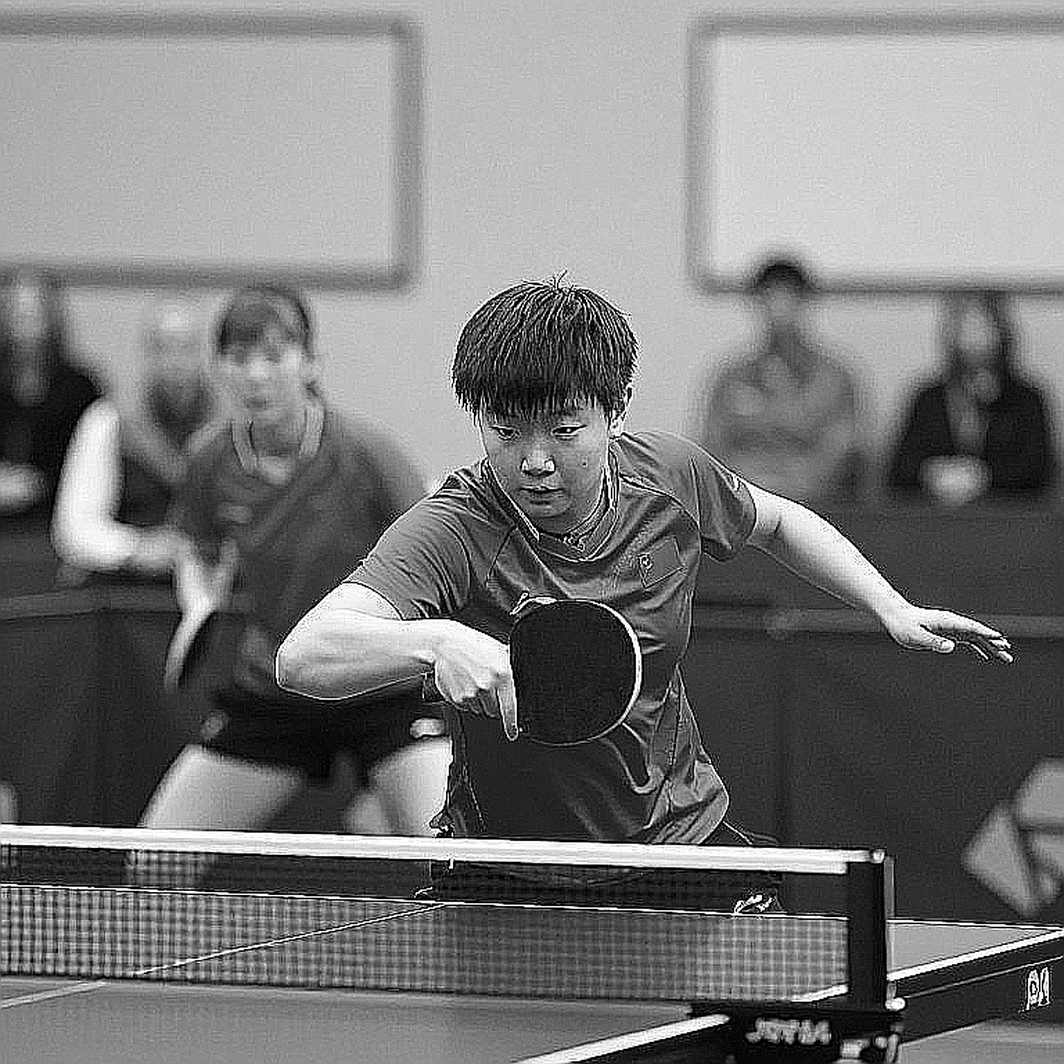
What is notable is that this gap repeats across almost every individual sport in Vietnam, where international results are so sparse that each appearance is treated as a special event rather than a data sample. But table tennis has an advantage many sports lack: the table is only two point seven four metres long, everything happens inside one frame, and a camera placed at the right angle can capture almost all the necessary information. The cost of collection is far lower than in football or athletics. Which means the barrier here is purely a decision, not a resource.
So the question I want to leave is elsewhere: who will be the first to publish a statistical table detailed enough to be argued against?
Every tactical diagram is a promise; only controlled chaos keeps it. The promise of Vietnamese table tennis over the next few years will rest on how far we dare to measure ourselves. I do not write to conclude; I write to open a new lane: next match, I will put the ruler back on the screen, but this time I will also record the times I could not measure. Because those gaps are the true map of this table tennis nation.